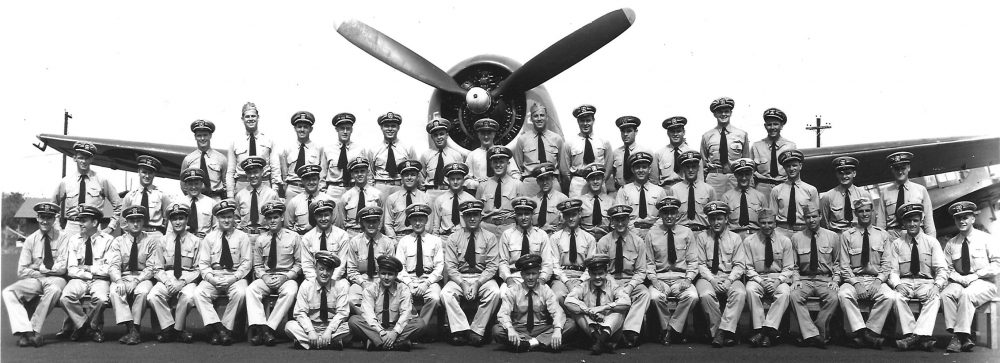
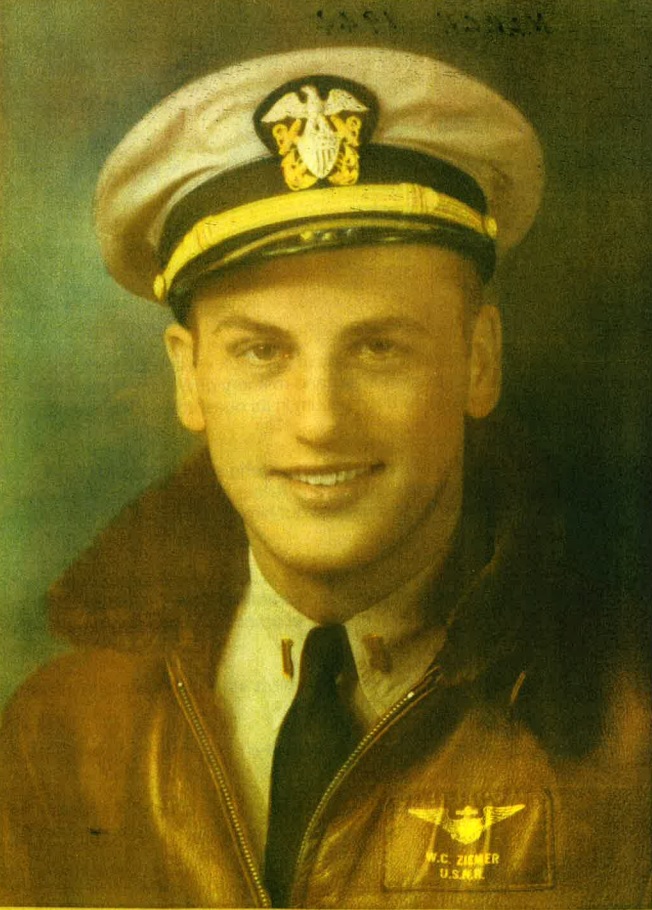
Today would be William “Bill” Ziemer’s 100th birthday. He might have made it to that milestone, too, if his siblings are any indication. Bill’s big sister Alice was 99 when she passed; his eldest brother John “Jack” Ziemer lived to be 88 years old; Ernest Ziemer, next in line, saw his 93rd birthday; and the youngest of the lot, Howard and Arthur, are still with us at 97 and 93 respectively. Longevity and service are the hallmarks of the Ziemer name. Sadly, William Ziemer died August 2, 1945, at the tail-end of the War. Though the circumstances surrounding his death are tragic and need to be discussed, today is Bill’s birthday. Let us reflect on and celebrate his life on this special day.
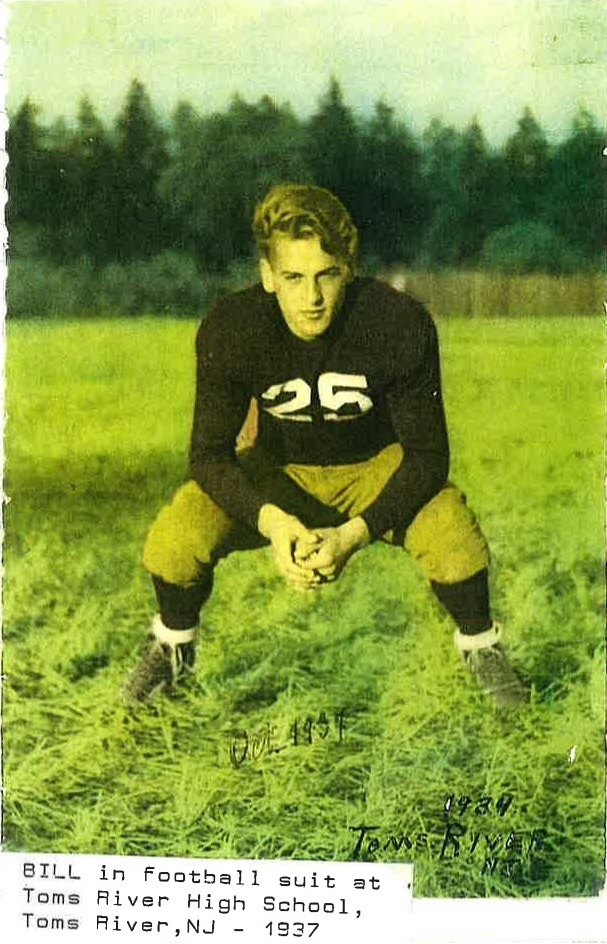
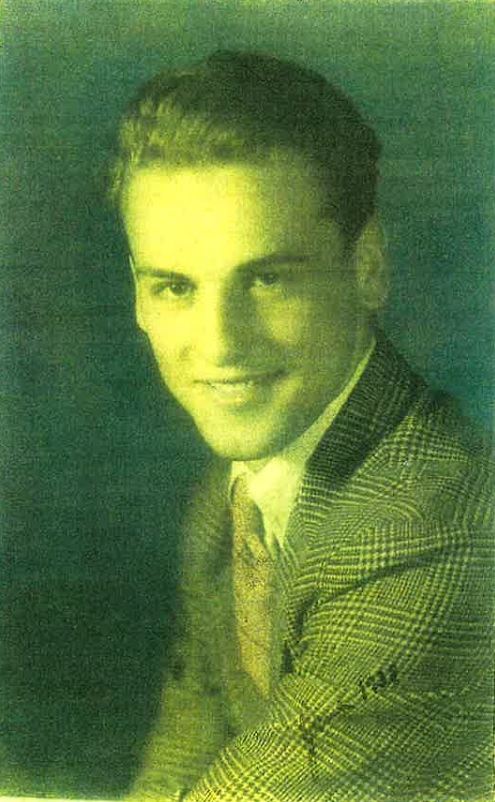
William Creveling Ziemer was born November 18, 1920, to John and Lulu (nee Creveling) Ziemer. Though he and his four older siblings were born in Pennsylvania, the family soon moved to Toms River, New Jersey, where Howard and Arthur were born. Bill flourished in Toms River, excelling academically and athletically. He could have graduated high school at 16 based on his academic performance, but he chose to stay back a year to lead the Toms River Indians as captain of the football team.
According to newspaper articles, Bill was a “tall, husky” youth, a “threatening ball carrier” who could either muscle his way down the field or simply blaze past defenders. As a testament to his speed, he helped set a mile relay record during a Toms River track and field meet in 1938. His team took 1st place overall with 80 points. Rumson, in second place, was left in the dust with a score of just 19. In football, Bill’s name appeared frequently in the Asbury Park Press for touchdowns, first downs, and all around performance. His play with the Indians earned him a 2-year scholarship to the Hun School in Princeton, NJ. The school’s motto perfectly encapsulates the Ziemer family: Quaerite Scientiam Et Honorem, “Seek Knowledge and Honor.”
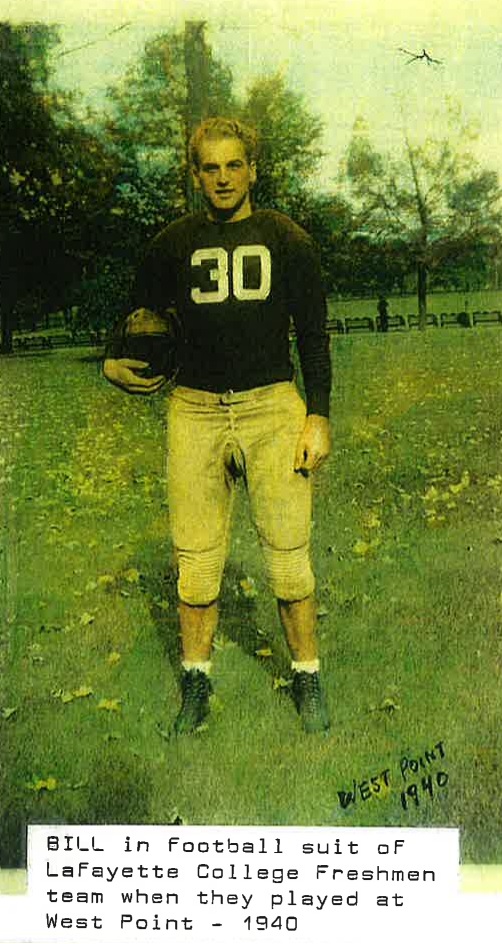
Bill graduated from the Hun School with honors and received a Pro Merito Award given to five scholastic leaders of the Class of ’40. In addition to an academic scholarship, he was awarded a football scholarship to Lafayette College in Easton, PA. It seemed that Bill’s rising star would make him a local football icon.
During his freshman year at Lafayette, Bill played first string for the “frosh eleven.” The next year, when he would have a chance to play varsity ball for the Leopards, he “made a favorable impression on coach Hook Mylin during spring practice…” When war arrived on American soil later that year, everything changed. Bill quickly traded in his football uniform for regulation Navy dress and began the rigorous training required of aviation cadets. Coach Mylin, who had just lost his star back, Walt Zirinsky, to the armed forces, now had to deal with Bill Ziemer, Zirinsky’s replacement, heading out to fight. The Lafayette Leopards had gone 5-4 and won their conference championship in 1941. In 1942, they finished 3-5-1. Young men like Bill were hard to find.
Service—in particular, Navy service—was a Ziemer family tradition started by the head of the household, John Ziemer, Sr. He had served in the Navy from 1910 to 1914, became a successful businessman in Toms River, and later served as a civilian aircraft inspector at Naval Air Station Lakehurst. His enthusiasm for the sea services and for aviation was so great that all five of his sons entered the Navy almost as soon as they were able.
John, Jr. served in the Seabees from early 1942 through the end of the war. He deployed to Iceland, the Marianas and Okinawa. Ernest enlisted in 1937 at age 18. Though he started out aboard destroyers, he transitioned into aviation around 1940 and made multiple deployments to Alaska as an Aviation Chief Machinist’s Mate in a PBY flight crew. Howard enlisted in November 1941, just before the U.S. was pulled into war. He served as an Aviation Machinist’s Mate 1st Class and in 1945 transitioned into pre-flight school. Arthur enlisted while still in high school and finished boot camp a few months before the official end of the War.
Bill started his training in Easton but quickly moved on to Chapel Hill, NC, for pre-flight instruction. Howard Ziemer, stationed at Norfolk, VA in the summer of 1942, took the bus down for the weekend to see his big brother. It was the last time the two would meet. Bill went to Oklahoma next, and finally to Naval Air Training Center Corpus Christi, TX, where he was part of Flight Class 12C. After receiving his commission as an Ensign he was put through advanced training in Florida and sent out to Fighting Squadron 36 (VF-36) on the west coast.
Like many combat aviators undergoing flight training, Bill had a brush with death before ever engaging the enemy. On October 7, 1943, he and Ensign J.N. Bales suffered a mid-air collision off the California coast. Both their FM-1 Wildcat aircraft were total losses, but somehow the two emerged from the incident unscathed. They were picked up in the water by a Navy vessel and brought back to their base at Ream Field. Ziemer was undeterred. He made it through the next month of training, celebrated his 23rd birthday, and shortly thereafter found himself aboard USS Cabot en route to Hawaii.
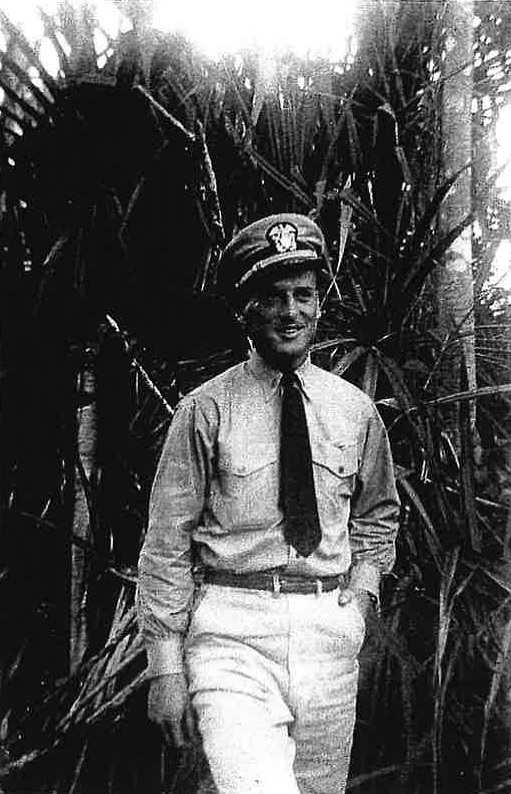
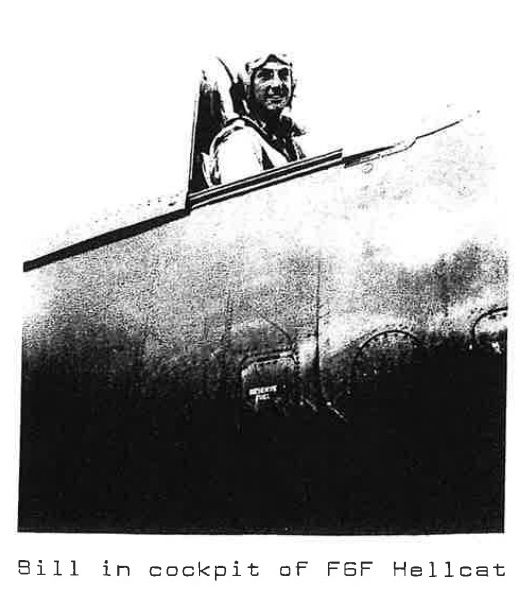
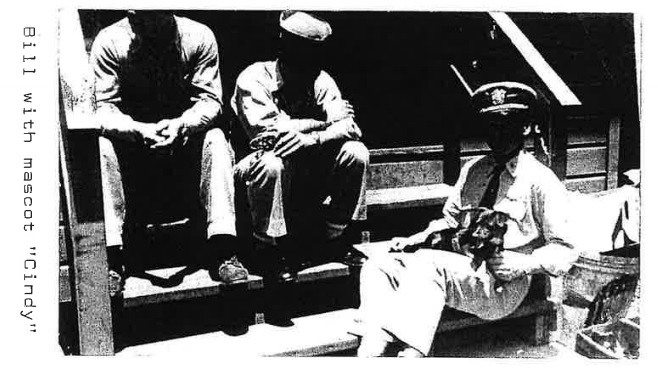

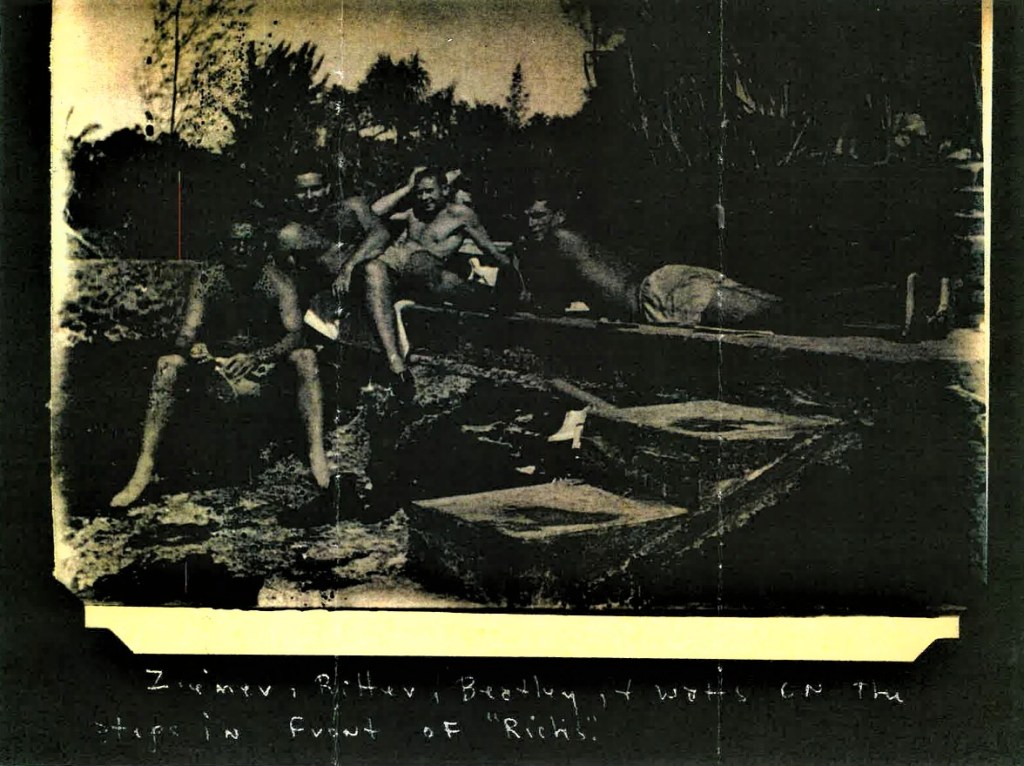
By this time the pilots in the squadron, recently re-designated VF-18, had gotten to know each other well. As in high school and college, Bill proved popular among his squadron mates. Numerous photos depict Bill and company swimming, lounging, posing with bandoliers and generally clowning around while they enjoyed the island amenities. Bill was also loved by Cindy, Fighting 18’s canine mascot, who rode as a passenger in his F6F on multiple occasions. Lest the reader think Hawaii was all fun and games, Bill’s flight log book shows that at the end of April 1944, he had amassed 765.5 hours of flight time. By the end of August 1944, when the squadron went aboard Intrepid, that number had ballooned to 927.2 hours. Every minute of practice would pay off when the shooting started.
One last treat in training arrived July 16, 1944, one month before VF-18 and Intrepid headed for Japanese waters. Bill’s brother Jack, in the Seabees, was passing through Hawaii on his way to Tinian as part of the Navy’s push in the Marianas. Bill wanted to take his brother up for a flight but the F6F Hellcat could only accommodate its pilot. To get around this problem, Bill and his division leader, Cecil Harris, checked out two SBD-5 Dauntless dive bombers. Bill had never flown this kind of plane before, but after a brief period reading the manual and a quick check flight, he was confident it wouldn’t be a problem. Jack Ziemer clambered into the rear seat of his brother’s Dauntless and one of his buddies hopped in behind Harris. The two planes took off for a quick hour-long joyride where the pilots showed off their prowess by skimming the wavetops. It was a memorable day for all involved. It was the last time Jack—or any member of the Ziemer family—saw Bill.
Bill Ziemer, Jim diBatista, Cecil Harris and Franklin Burley grew particularly close in training and in combat. The four men came together to form one of VF-18’s regular divisions. Harris and Ziemer were section leaders, with Burley and diBatista flying on their wings for mutual protection. Serving with Harris’s division meant facing some of the toughest strike assignments given to Fighting 18. Harris drew up the squadron’s flight schedules. Like squadron skipper Ed Murphy and Air Group commander Bill Ellis, Harris led from the front and didn’t shy away from danger. This fact is clear from the aircraft action reports documenting Bill Ziemer’s experience in September and early October.
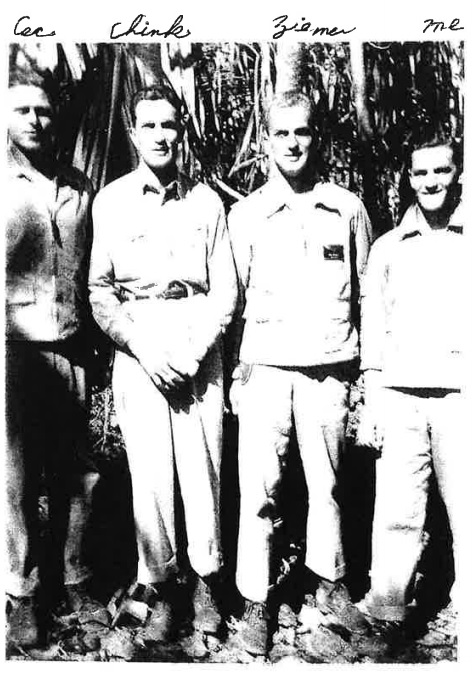
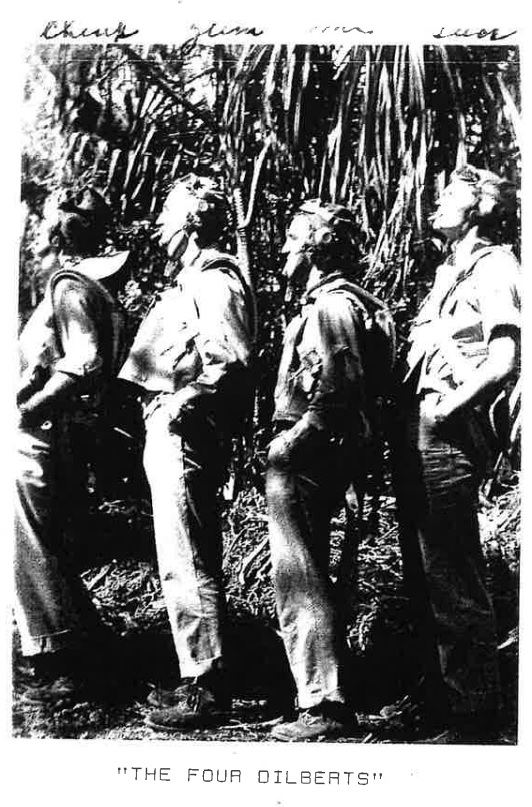
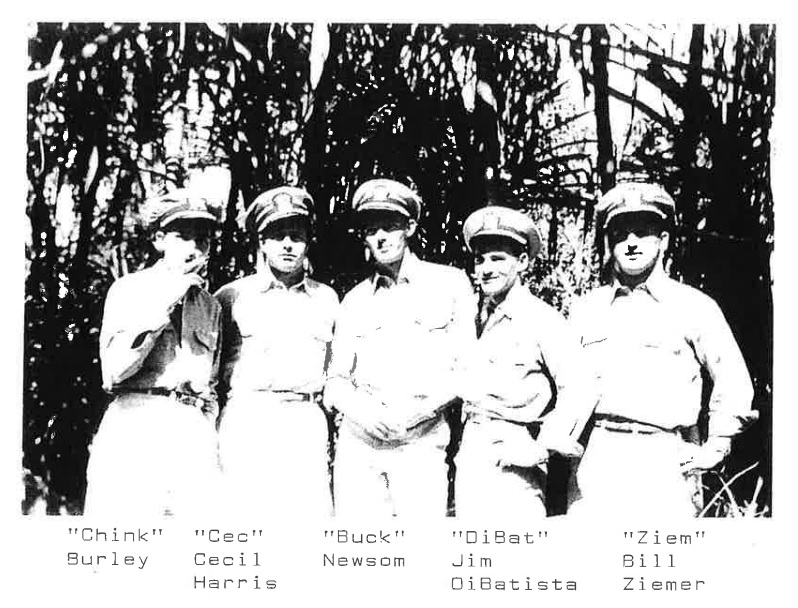
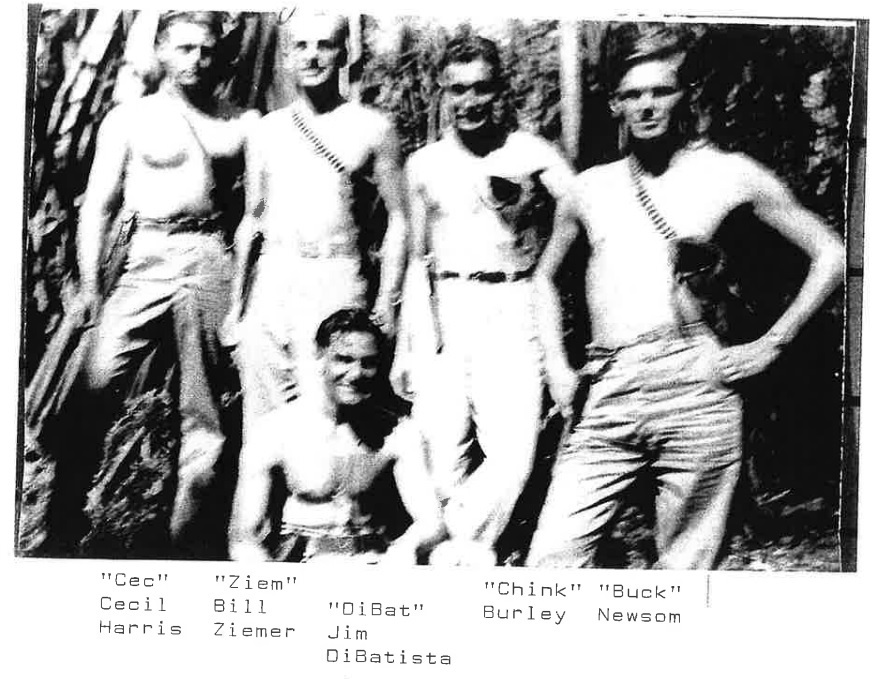
On September 13, 1944, eight fighters, including Harris’s division, escorted Air Group 18 bombers out to airfields on Negros Island, Philippines. “They ran into a hornets nest over Fabrica, thirty-six Jap planes,” according to the air group’s War History. Harris had already seen his fair share of combat, but this would be the first time squaring off against enemy pilots for Ziemer, Burley and diBatista. It was a trial by fire.
As the bombers completed their runs on the airfield below, Japanese fighters swarmed up to exact their revenge. Harris’s division dropped down from above like a hammer, causing enemy aircraft to scatter in their wake. They continued hurtling down through the clouds until they came out into clear skies above the field. There, at only 500 feet altitude, more than a dozen Japanese fighters were milling about above the wreckage of their base. Harris and Burley went one way, and Ziemer and diBatista went another. Splitting up was never ideal but this was a life-or-death situation.
Ziemer and diBatista stayed down low making passes on the disorganized bunch of Japanese planes over the field. The two novices kept overrunning their quarry, but despite their inexperience and numerical disadvantage, they both managed to come out of their ordeal alive. Bill even managed to chase down an enemy “Oscar” fighter in the process, putting rounds into the enemy’s cockpit and engine area until the plane crashed through the trees below and into a river. For “his daring tactics and cool courage in the face of terrific odds,” Bill was awarded the Air Medal.
Squaring up against enemy fighters was only the beginning. Bill also flew napalm bombing missions during the Marine invasion of Peleliu on September 17, 1944, and participated in a surprise hit-and-run mission against Okinawa one month later, on October 10. Though these were important strikes, the most intense combat Bill saw—and the toughest day of flying according to most pilots later interviewed about their experience—came on October 12, when Admiral Halsey’s flattops hit “Fortress” Formosa (Taiwan).
As part of the morning fighter sweep against northern Formosa, and as part of the division assigned to fly low cover over its airfields, Harris’s division would be the first to face the awesome barrage of anti-aircraft fire from Japanese ground emplacements, and the division most vulnerable to enemy aircraft hiding in the clouds above. The Japanese were on high alert after the strikes of October 10 so there was no chance for surprise. Ziemer, Harris, diBatista and Burley carried 500lb. bombs for their mission. Their target: an ‘L’ shaped series of hangars on Shinchiku airfield. The aircraft action report for the sweep notes, “The glide bombing runs were made…in the face of intense flak of all callibres [sic]…” In spite of the danger he faced, Bill Ziemer pressed home his attack to score a direct hit on one of the hangars below. It was another ‘touchdown’ by the football wunderkind.
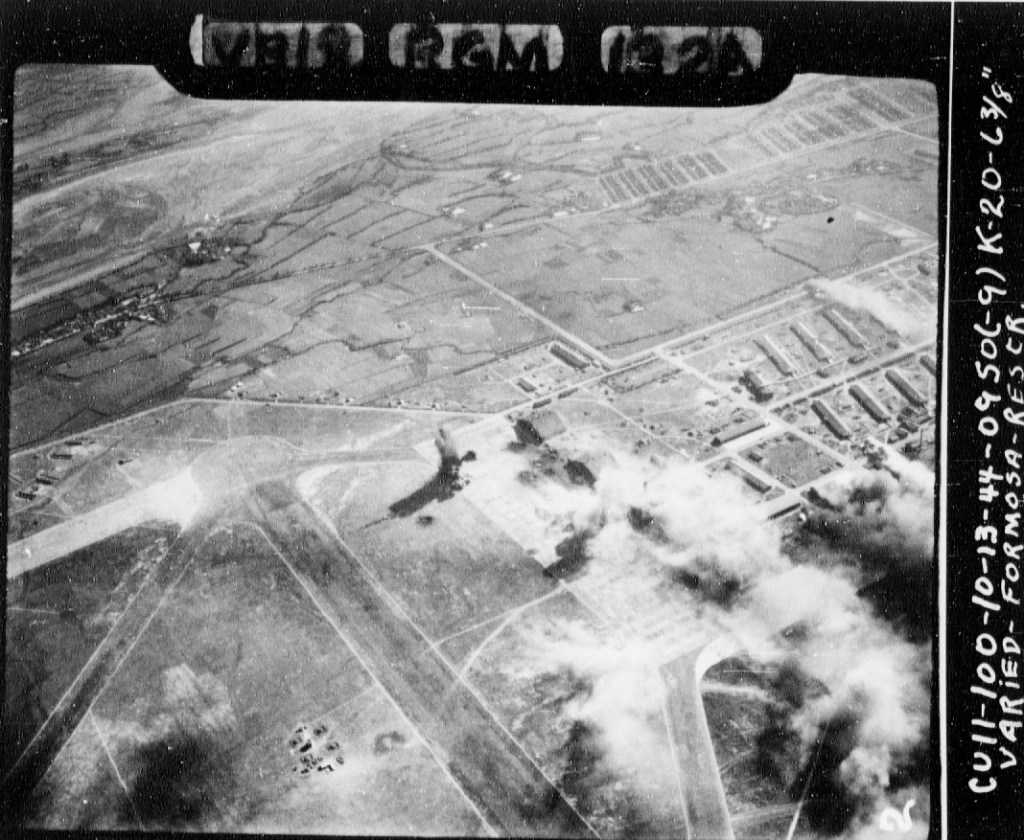

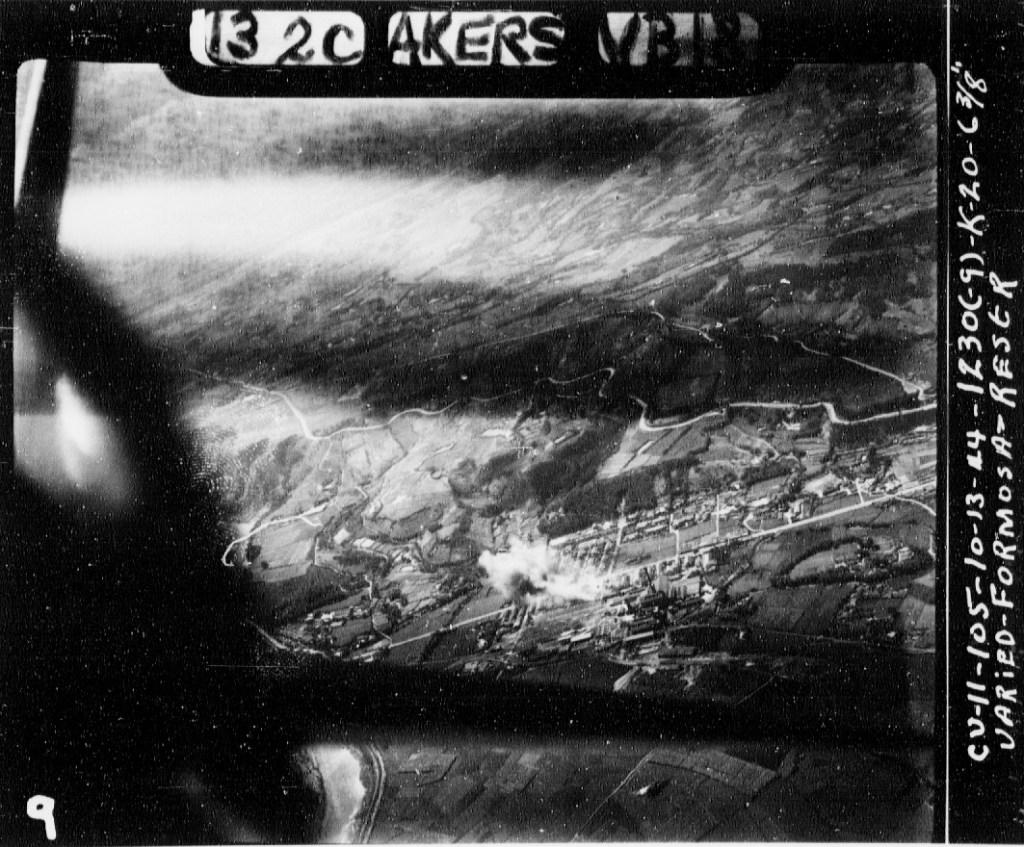
Photos of strikes on the Shinchiku (Hsinchu) complex taken by Air Group 18 enlisted men
Ziemer, Harris and their wingmen pressed on to the next field in line. There was still much work to be done. As they groped their way north through increasingly bad weather, they spotted 6–8 twin engine bombers circling down below, apparently getting ready to land at nearby Taien field. Since Harris’s radio was out, Ziemer took point. Those lumbering Japanese planes were sitting ducks for the hungry Hellcat pilots. According to the account in Edward Sims’ Greatest Fighter Missions,
Ziemer is maneuvering perfectly to be in a position to open fire on the enemy bomber which is last in formation and farthest to the right. Harris kicks left rudder and…eases out to the left. He watches Ziemer, ahead, almost within firing range.
The bombers are caught from behind by surprise. A few seconds more and the Hellcats will be pouring shells into them. The seconds drag. Now! White smoke streams back from the wings of Ziemer’s Hellcat as the six 50-caliber guns send streaks of shells into the trailing brownish-green bomber on the right. In seconds Ziemer’s fire is tearing holes in him, and smoke is streaming back. A splash of flame! The enemy bomber has exploded and disintegrated.
But the pilots covering Harris’s division made a fatal mistake. Not encountering any aerial opposition whatsoever, many headed down to help polish off the enemy bombers. It only took two minutes to complete the deed, but that was plenty of time for the Japanese fighter pilots hiding in the cloud cover above to make their move. As many as 20 enemy fighters suddenly burst through the clouds in hot pursuit. Ziemer and his wingman diBatista saw the danger to their squadron mates. They immediately started climbing at full throttle and RPM in a heroic effort to even the odds. Unfortunately, their steep climbs bled off precious speed, and as they drew nearer to the action more and more Japanese planes appeared from above.
Parachutes filled the air. Japanese planes exploded. Fighting ranged over about eight square miles of airspace from as low as the treetops to as high as two miles altitude. diBatista’s plane “was riddled by 20mm and machine gun fire and he was dazed by the impact of several 20mm on his armor plate…He did not see his section leader again after this attack.” diBatista barely made it back to the fleet. His Hellcat was so badly damaged that he was forced to bail out, and in his haste to get free from the unstable aircraft he actually wound up slamming against it, breaking his leg in the process. He was lucky to survive.
Ralph DuPont, Isaac Keels and Bill Ziemer were not so lucky. One Hellcat was seen to crash in flames over Formosa. It was not known whose. Squadron Commander Murphy wrote letters to all three families explaining that while their sons had been listed ‘Missing In Action,’ he did not think the odds were in their favor. To the parents of Isaac Keels, he wrote,
Isaac was a conscientious and aggressive fighter pilot, and when last seen, he was engaging enemy aircraft that greatly outnumbered him; the chances are overwhelming that he gave his life courageously carrying out his duty in the finest tradition of the Navy. I am reluctant to write this but I feel it would be unfair to you to hold out any but the slimmest hope of his survival.
Unbeknownst to his squadron mates in the air and back aboard Intrepid, Bill was fighting for his life on enemy soil. According to Lt. William A. Davidson, Jr., an Avenger pilot from USS Wasp who was shot down the next day, Bill parachuted down and hit the ground running. He managed to elude his Japanese and Formosan adversaries all day and night. The next day he made his way to the beach to inflate his raft, but it had been damaged during his run through the rough jungle underbrush. Before he could patch it up and make it safely off the coast, Bill was captured and taken prisoner.
After being transferred to Camp Ofuna outside Tokyo, Bill and Lt. Davidson, who were in adjacent cells, endured starvation, exposure to the elements, beatings, tropical illnesses and all manner of privation. Through it all Bill clung tenaciously to life, speaking nonstop about his family and his childhood home. These sweet memories sustained him as long as they could. Tragically, after fighting for months on end against monstrous treatment, Bill succumbed to illness on August 2, 1945. He was likely the last resident of Toms River, NJ, to be killed in the War.
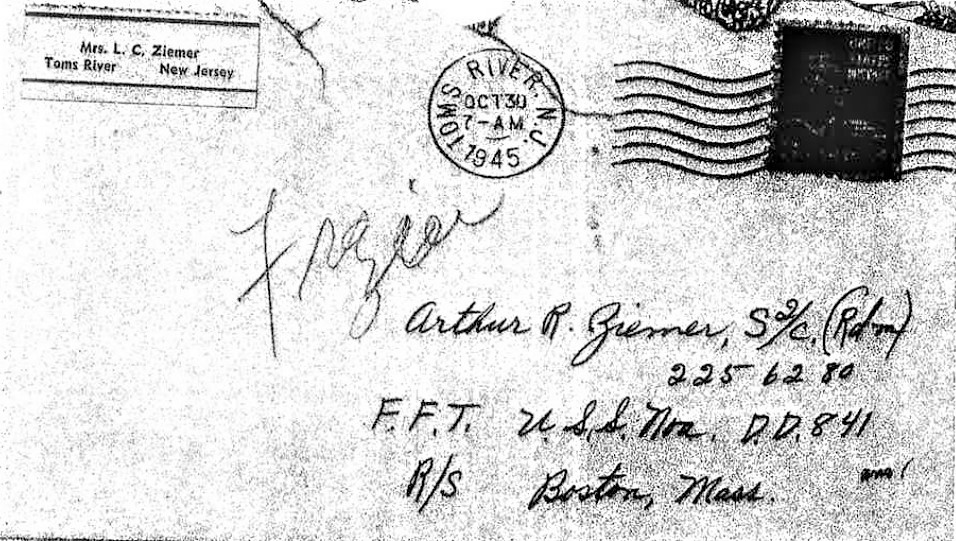
Bill’s mother learned her son’s fate soon after the War drew to a close. Bill and Lt. Davidson had made a pact that whoever survived imprisonment would tell the others’ family about their fate. Lt. Davidson made good on that promise. According to a letter sent by Bill’s mom Lulu to her youngest son Arthur, who was at that moment serving aboard the destroyer USS Noa,
While they were confined, they would talk in whispers, thru a crack in the wall, & Bill described our house, so much so that D. said he would have known it anywhere. Bill used to tell him about the checkerboard cakes I used to make, & the fruit cakes I’d send him, & about Dads chair & mine in the living room, & lots of other things.
Bill’s remains, which were initially buried at nearby Ryuhoji Temple, ultimately made their way back to his beloved country to rest at the National Memorial Cemetery of the Pacific alongside other servicemen who made the ultimate sacrifice. A memorial marker was erected in his honor at the court house in his hometown of Toms River, and in 1999 a tree was dedicated in his memory nearby, with Howard, Ernest and Arthur Ziemer taking turns talking about Bill’s life and legacy. They had an especially close connection to it, and not just on account of their birth—both Howard and Ernest spent time aboard Bill’s ship, USS Intrepid, during their decades-long careers in the Navy. Howard retired as a Lieutenant Commander and helicopter pilot in the Navy, and Ernest as Chief Aviation Machinist’s Mate at Lakehurst.
To me, that final act of planting a memorial tree seems especially fitting. Bill was nourished by the same soil that would feed and the same rains that would water that tree. Like Bill, as it grew it would give back—give of its shade, give out fresh air. It would enjoy summer blooms and endure winter frost. But what it would symbolize—strength, uprightness, perseverance, community—serve as reminders of William Ziemer’s character and as an example for future generations of Americans.
Happy Birthday Bill, and thank you.
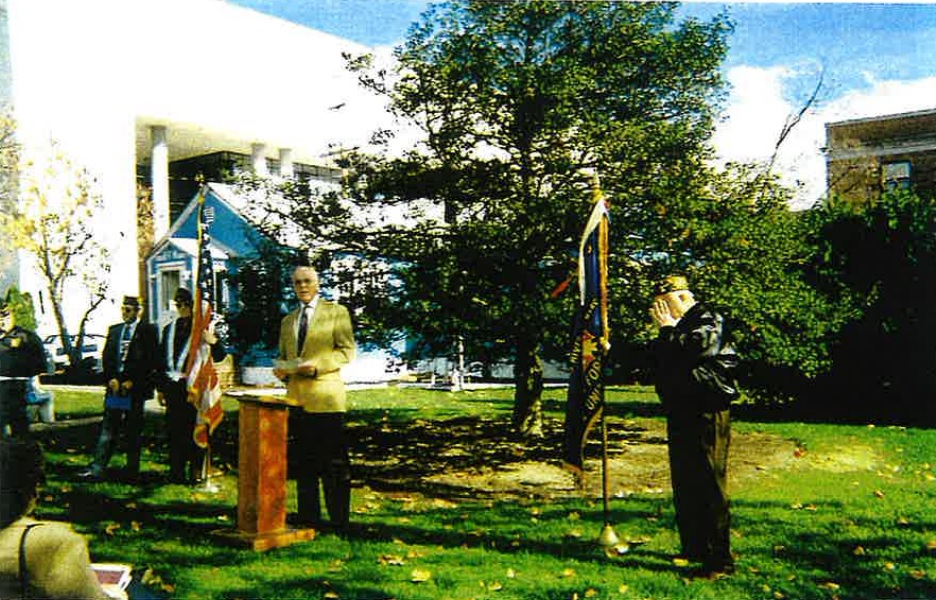
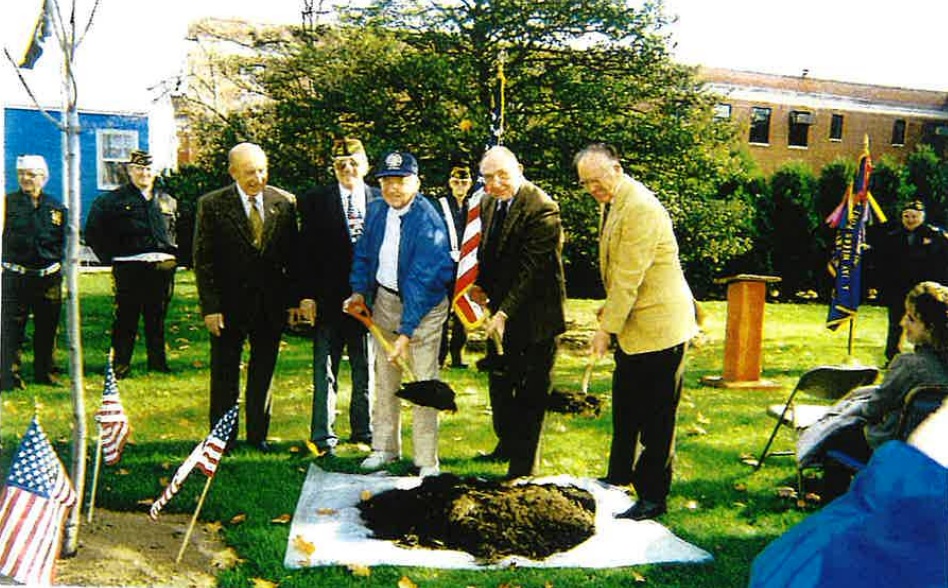
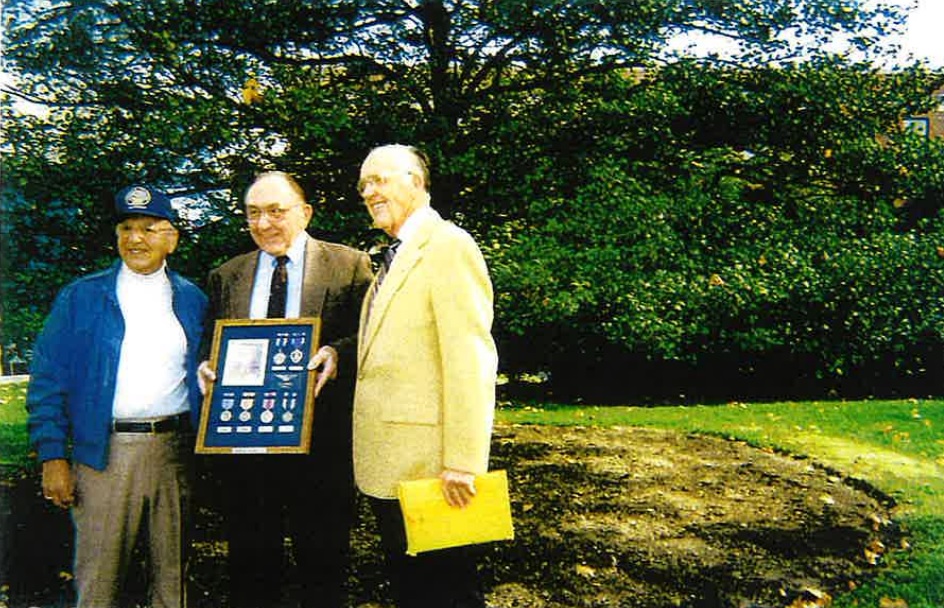
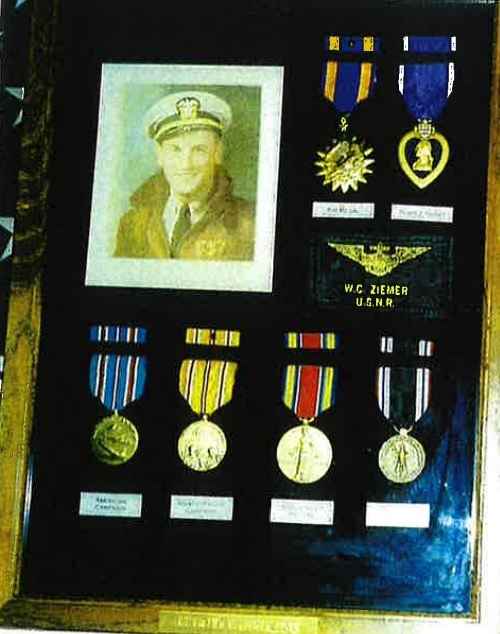
Ernest, Howard and Arthur Ziemer at the memorial dedication held in their brother Bill’s honor, Toms River, NJ, November 20, 1999
 Two-a-Day 18
Thanks for the write up. Bill was an inspiration to me and led me to become a Navy pilot. Howard Ziemer
LikeLike
Thank you for publishing this article!
I enjoyed reading this so much. Ernest Ziemer was my grandfather and Bill was my great Uncle. If only he had lived and I had the chance to meet him. So sad but so proud to be his descendant.
LikeLike
The Ziemer family is truly remarkable! So grateful to have you all involved and to have been able to hear about Bill direct from Art and Howard. Your pride in the family’s service is well-merited. Thank you for reading, Lisa.
LikeLike