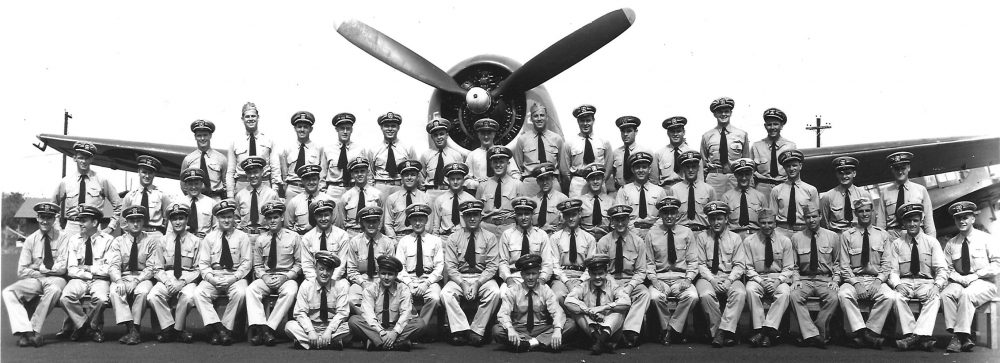

Bill “Jeep” Daniels, Intrepid’s fighter director, was closely monitoring the radar console at his post in the ship’s combat information center. Each blip on his screen represented a pilot on combat air patrol (CAP) cruising protectively around the carrier group. He furrowed his brow. Four of the blips looked too spaced out for his liking. He’d have to herd those planes back into formation.
Jeep got on the radio. “Close up, Spider.”
Frank “Spider” Foltz was flying on the outside edge of his four-plane division. When he heard Jeep’s transmission, he thought it came from his division leader, Roy “Bud” Burnett. He moved in tight on Bud’s wing. He was practically within spitting distance.
Maybe Jeep’s instruments were on the fritz; maybe he thought Spider Foltz could stand to be wingtip-to-wingtip with Burnett. Whatever the reason, Jeep radioed again, more insistently this time: “Close up, Spider!”
Foltz again thought the command came from his division leader. He shook his head in disbelief. ‘Close up?’ Couldn’t Bud see they were practically touching? Spider was exasperated. He got on the radio and rather matter-of-factly replied, “I can’t get any closer, Bud!”
Bud Burnett and Jeep Daniels thought the whole thing was hilarious. Though it was just a tiny incident in an otherwise action packed deployment, it became a favorite memory between the two, an in-joke that only they could understand. They had been through something together. The men you flew with and the ones who guided you home? You were thick as thieves. You were brothers in arms.
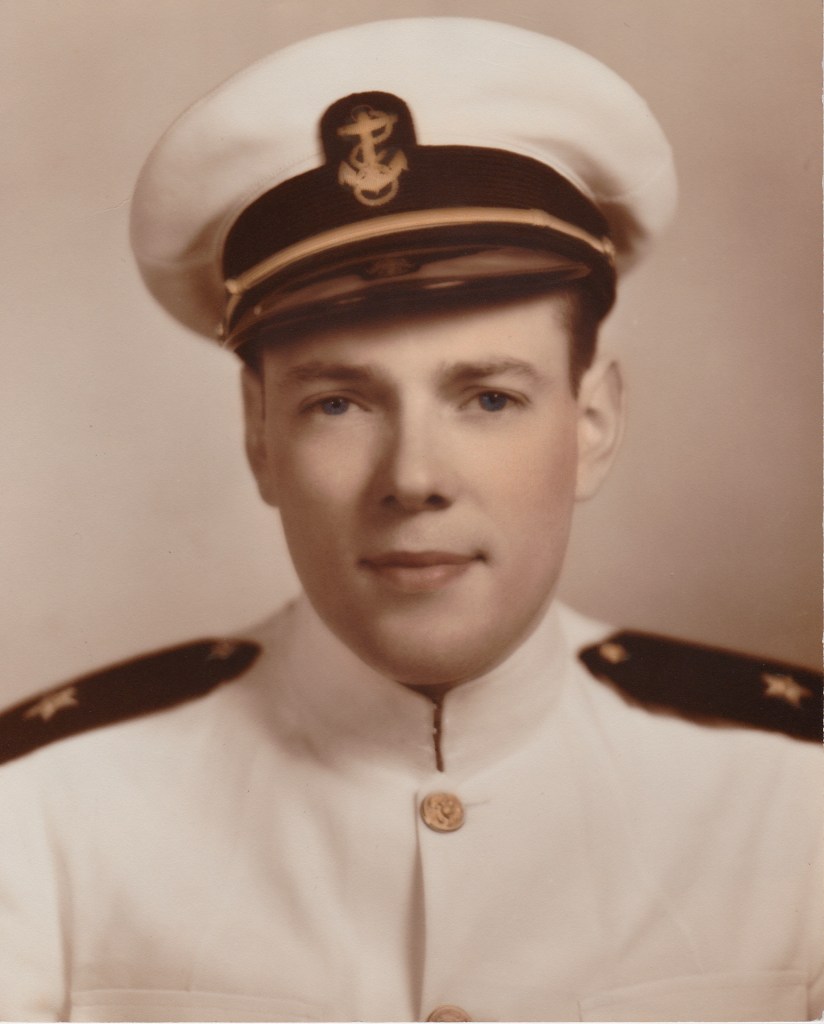
Roy Otis Burnett, Jr., was born June 29, 1916 in Portland, Oregon. He was the baby of the family: the youngest of three children and the only boy of the bunch. Roy’s father was a car dealer who worked hard to build his namesake, Burnett Motors, into a local institution. When the Great Depression hit, times were lean and Roy sold newspapers to contribute to the family’s earnings. When the American economy began to bounce back, however, his father’s car business became a runaway success. The family didn’t have to worry about money from that point on. In 1935, Roy Burnett Sr. and his business were featured as part of a full-page spread in the local Beaverton Enterprise. The advertisement paid homage to leaders in the community, saying of Burnett and other entrepreneurs, “These men, outstanding in their separate chosen professions and business, constitute a very great part in the success and increasing growth of Portland…they are truly Americans.”
That same year, Roy went off to the University of Oregon. Everyone called him “Bud,” a nickname he carried throughout his life. He was athletic, good looking and well-liked on campus. In his freshman year he played on the basketball team, pledged Beta Theta Pi and even got a visit from his “old man” on the University’s annual Dads Day. While he wanted to be an actor or a lawyer, if all else failed he had a thriving family business to join after graduation. The world was his oyster. But as war erupted in Europe, the collective best laid plans of America’s youth began to go awry. Bud could see the writing on the wall. If he was going to fight for his country, he wasn’t going to wait to be drafted: he was going to do it on his own terms. He enlisted in the Navy October 4, 1940, more than a year before the attack on Pearl Harbor.
His odyssey started close to home with elimination flight training at Naval Reserve Aviation Base Seattle, WA. It was practically in his backyard. To get his Wings of Gold, however, Bud would have to travel clear across the country to Pensacola, Florida. It probably seemed like an incredible distance at the time. By the end of the war, though, it would pale in comparison with the number of miles he traveled on the seas and in the skies.
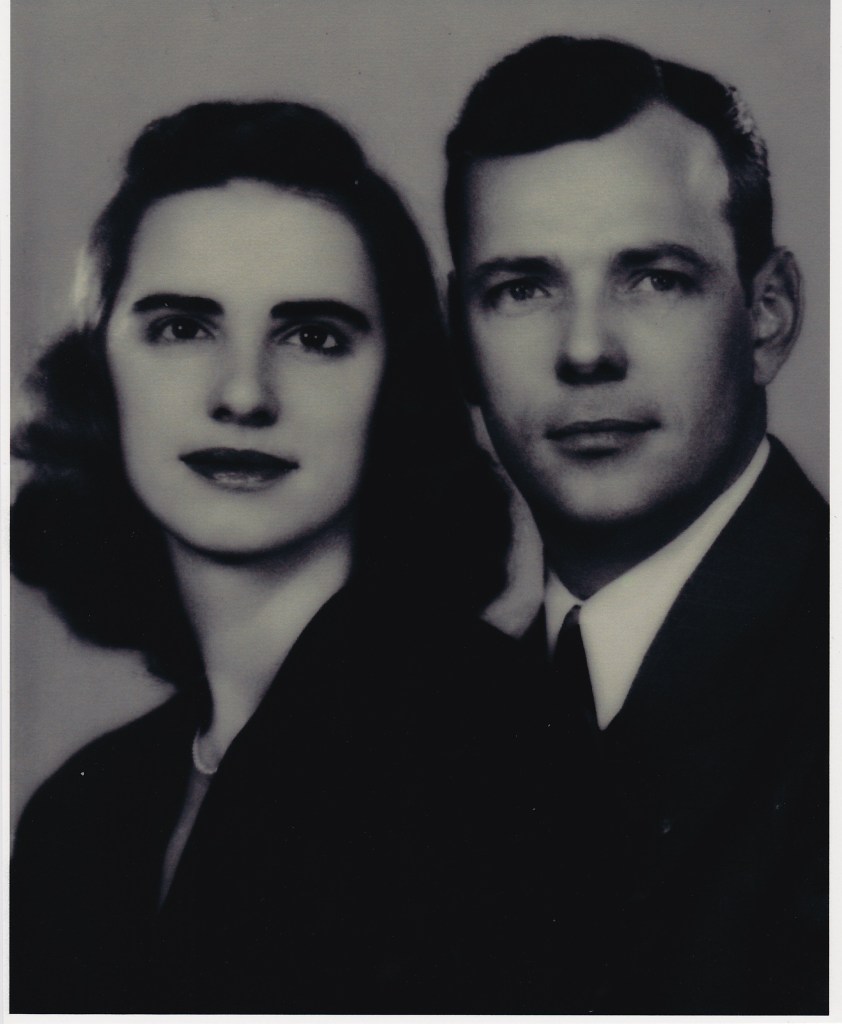
After earning his wings, Bud was posted to Naval Air Station Pensacola as an instructor. It was there he met Adelaide McSween, a beautiful—and extremely bright—young woman. She was about to graduate from Mary Baldwin College with a degree in sociology and was one of six seniors listed in Who’s Who of American College and Universities for her dedication to serving the campus community. The two were engaged in April 1942 and married just a couple months later. Roy’s marriage broke hearts back home. Years later, one of his female classmates could still remember his charm. She summed it up this way: “Bud was silk.”
Burnett’s tenure with “Two-a-Day 18” began the following year, when the squadron was still designated VF-36 and practically none of its pilots had yet seen combat. His name appears in the War Diary of USS Copahee on November 20, 1943. The squadron was undergoing carrier qualification and refresher training that day. During one of his landings, Bud missed the arrestor cable and was forced to slam into the little carrier’s crash barrier. The impact did major damage to his F6F Hellcat and minor damage to the ship’s wooden flight deck where his propeller sawed into the planks. Though that sounds bad, it was far from unusual. Bud’s overall performance got him a pass. Soon, he and the other men in the squadron were put aboard USS Cabot and sent to Hawaii for the final leg of training.
By this time Bud was a 27-year-old full lieutenant, making him one of the oldest and most senior-ranking men in the squadron. As a result, he served as a mentor to a number of the squadron’s young ensigns. He was like an older brother to Robert “Fox” Morris, a 20-year-old New Yorker who Ed Ritter called “one of the diminutive heroes of the squadron…” Bud and Fox posed for pictures in Hawaii during training, spent time aboard an escort carrier after their temporary flight duty in early ‘44, and of course served in combat together later that year aboard USS Intrepid. The two remained friends after the war as well. One of Fox Morris’s sons remembered that “Uncle Bud” would visit the family in Florida, despite the fact that Burnett lived on the other side of the country.
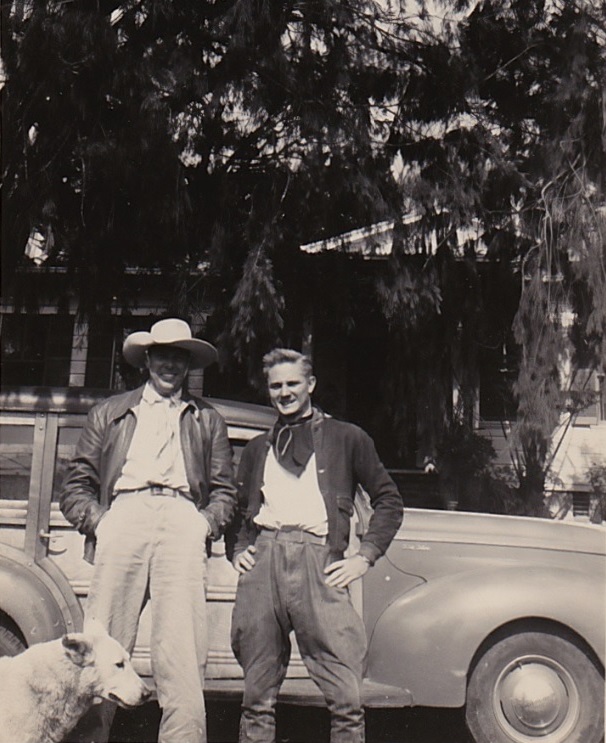
According to Harold Thune, Burnett was also close with William “Junior” Sartwelle, a Texan who was a full eight years younger than Burnett. The two had much in common. Both were slim and good-looking. Their fathers were both successful businessmen—Burnett’s with cars and Sartwelle’s with cattle. And of course they both loved to fly. Sadly, Junior Sartwelle was lost September 24, 1944, when his plane was hit by anti-aircraft fire over Cebu Island in the Philippines. Thune remembered that, “…when he got knocked down that was kind of tough on the guy [Burnett] because they kind of developed almost a father/son relationship…”
Still, the loss wasn’t something Bud could dwell on, especially since there would be another two months of combat before the squadron headed home. He had to make sure that the rest of his division survived their trial by fire in the Pacific. He had to look out for Jeep Daniels back aboard Intrepid, too. Nobody was going home if the ship was sunk. Fortunately, Bud excelled as a patrol pilot. Four of his six credited victories occurred while he was defending the fleet off the coast of Formosa.
On the afternoon of October 13, 1944, Burnett was flying snooper/anti-submarine patrol (SNASP) with his four-plane division. It was a rainy day with big clouds blanketing most of the sky. Their Hellcats were loaded with 250lb. depth charges in case a Japanese submarine reared its head, and they flew low over the water to make sure they couldn’t miss their quarry. The threat that day didn’t come from beneath the waves, though: it came in the form of a Japanese bomber attempting to slip through the Navy’s defenses.
As soon as Burnett saw the brown paint job of the D4Y “Judy” against the clouds above, he sprung into action. His Hellcat would close the distance in no time. The two Japanese crewmen in the bomber knew they were in trouble when they saw him coming. They also knew enemy ships were still miles away. With no other choice, the pilot jettisoned his bomb and made a run for it. The Judy’s gunner waited until the last second, when he knew he couldn’t miss, and opened up with a hail of accurate gunfire. A round punched a hole in Bud’s wing; another gouged metal out of his propeller. But the Hellcat was built to withstand much more punishment than that. Bud returned fire, leaving the enemy plane smoking before he pulled out, readjusted his point of aim, and unleashed a second burst that sent the Judy crashing into the waters below.
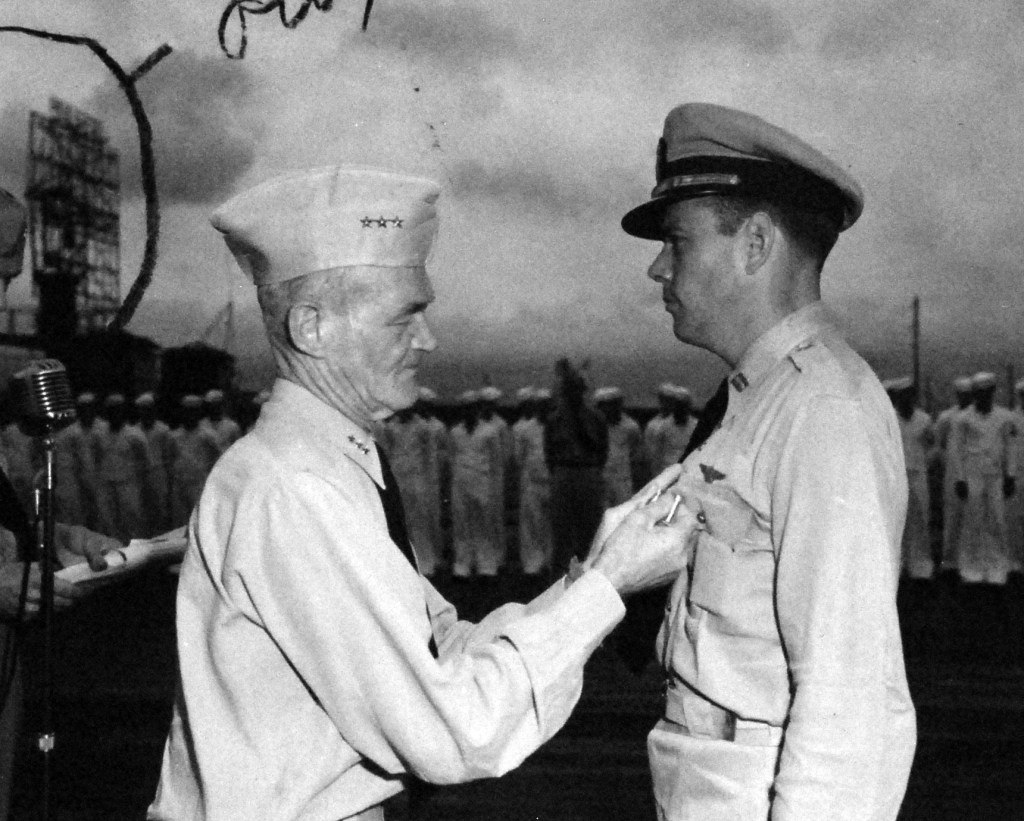
Bud flew again the next day. It was another day of rain squalls and clouds, patrol flights and attacks by Japanese planes. This time it wasn’t one or two snoopers, though: Japanese aircraft were pouring out of the clouds by the handful to repel the invaders. The Imperial Japanese Navy was throwing everything it had left against Halsey’s carriers, including the remnants of its carrier groups and the T Air Attack Force, Japan’s specialized nighttime and foul weather attack unit.
Despite having a numerical advantage of nearly 3-to-1, the Japanese pilots were easy prey for their American counterparts. Most of the men in Hellcats had hundreds more hours of training than their Japanese counterparts. They had better equipment and the benefit of fighter directors back aboard ship helping them “see” through the miserable weather. Jeep Daniels helped vector his pilots out to an incoming raid of 30 enemy planes. Burnett downed two. Only one managed to get through the indomitable defense put up by the combat air patrol.
A second raid of 6-9 straggles came loosely on the heels of the first attack. Burnett once more put himself directly in harm’s way to neutralize the threat. Gunfire pinged off of his propeller and engine but his plane didn’t even seem to register the damage. He quickly closed on the plane he was chasing, pouring .50 caliber rounds into its engine and fuselage until it burst into flames. His division members, Spider Foltz and Fox Morris, both shot down planes of their own. Intrepid came through the ordeal unscathed.
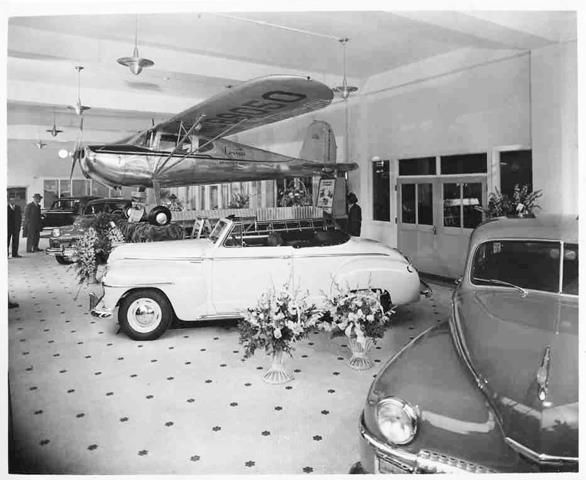
After the war, Bud settled back in his native Portland with Adelaide. He joined his father at Burnett Motors as the company’s Vice President and continued to grow the business, including serving as the Northwest distributor for Cessna. He and Adelaide adopted three infant children between 1948 and 1954. The couple lavished them with affection.
A prosperous business allowed him to buy land: first a 60 acre farm in Portland’s Lake Oswego suburb, and then a ranch house up the hill from the original property. Bud was a cowboy at heart. He kept horses and was a talented polo player for many years. He even went in on an actual ranching venture in the 1960s, raising wheat and cattle on 13,000 acres in eastern Oregon. Perhaps it was also a way to honor the memory of William “Junior” Sartwelle, the young Texan who didn’t make it home.
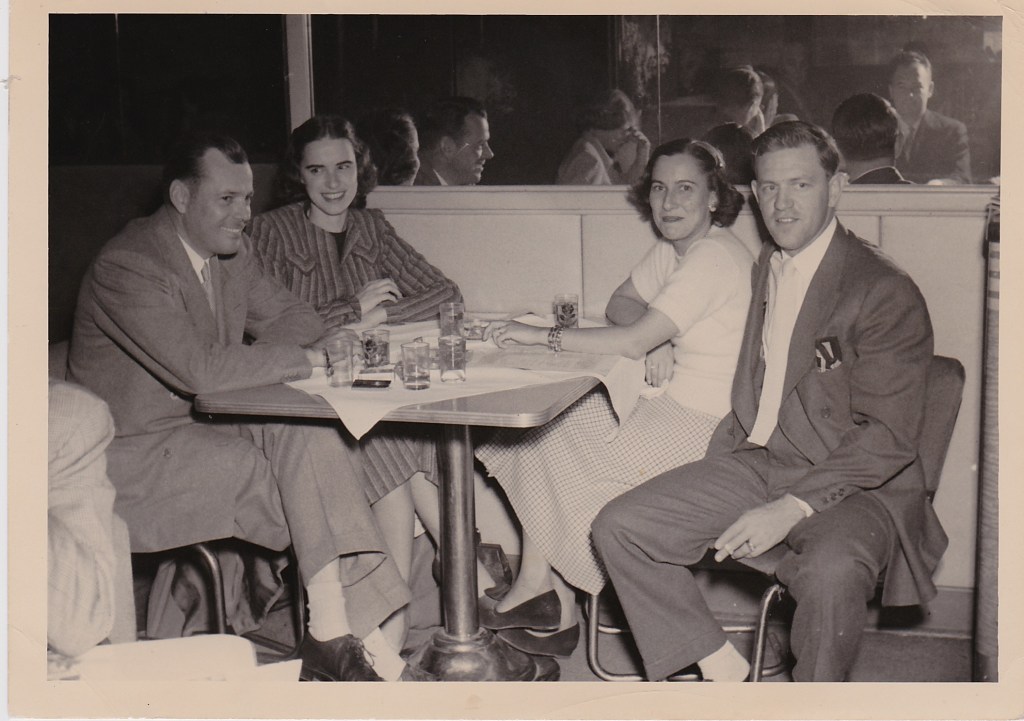
Besides his longtime friendship with Robert “Fox” Morris, Bud also kept in touch with Bill “Jeep” Daniels, who visited the Burnett family at their Lake Oswego farmhouse in the 1950s. Daniels made a fortune bringing cable television west of the Rockies. He became renowned for his philanthropy, and that extended to helping care for Bud and Adelaide when their health began to fail in the late 1990s. No expense was too great to ensure that they received the best treatment and round-the-clock care in the final years of their lives.
When Bud passed in early 1999, Daniels sent a large floral American Flag to the funeral in recognition of his long-time brother in arms. He also sent a message to Bud’s daughter, Kate, whom he clearly adored. He wrote:
Kate My Love,
I know what you are going through. I have been there. Just always remember that I will be your new Bud, your Dad, your friend, your love.
I hope you remember my note, in “Close up, Adelaide, close up Adelaide,” that is my famous note to Bud, “Close up, Spider, close up, Spider.”
Much Love,
“Jeepo”
Jeep Daniels passed the next year. Perhaps it was time for him to “close up” with his Intrepid brother, Bud. The pictures of friendship that have survived these years, the reminiscences of their children, and the stories they chose to pass on show us what these men wanted to focus on after their ordeal in the Pacific. Rather than war stories and tales of valor, they held fast to moments of hope, of levity, and ultimately of brotherhood.
 Two-a-Day 18
Very nice tribute to my Dad.
LikeLike
Thank you Evan! Your comment means a great deal to me. I’m grateful to have had the chance to help recognize his service.
LikeLike
What an American story. Thanks to all your family.
LikeLike