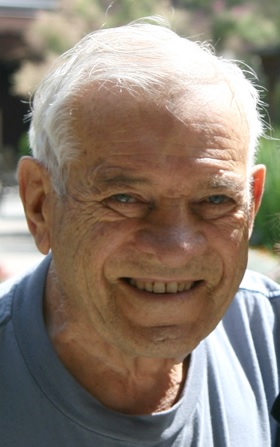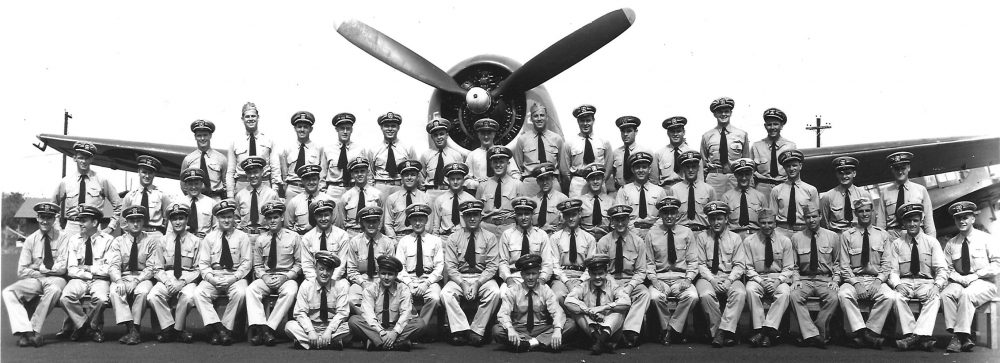
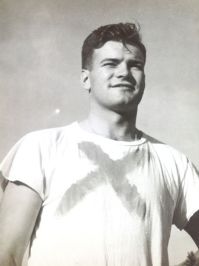
“Butte Rat” sounds like an insult to the uninitiated. Rats are thought of as dirty. They scurry about underground in their hardscrabble existence, getting only brief glimpses of sunlight and whatever food they can pilfer from the world above. But residents of Butte, Montana wore the Rat label with pride. They thrived on adversity. They shared a unique set of experiences which they carried into outlying areas—into university towns and centers of commerce seemingly a world apart from the mining town that led to their nickname.
William P. Mufich was a Butte Rat par excellence. He was born on December 5th, 1919, the youngest of 4 children. Growing up, Bill spent time outside the classroom helping in the mines alongside his father and older brother. He was smart and athletic, and actively encouraged by his father and the bosses in the mines to pursue a college education.
His athletic talent helped him get there. As a member of the Butte High School ‘Bulldogs,’ Mufich caught 3 passes for 46 yards in the 1937 State Championship game, helping bring the title home to Butte. His performance that year earned him a slot in the All-State team as well as a scholarship to play pigskin with the University of Montana ‘Grizzlies.’ Bill wasn’t the fastest man on the field and he wasn’t the biggest, either. He was known instead for his toughness, intelligence and accuracy. More than anything else, though: “He was a teammate kind of guy. Whatever his role was he just bolstered up the other guys.”
These attributes stood Bill in good stead after his college graduation in 1942, when he enlisted in the U.S. Navy. Aviation was his path from the get-go. Bill took naval aviation courses at Carroll College in Montana before being shipped off to Pre-Flight School at St. Mary’s in Oakland, CA. He couldn’t have known back in high school that the skills he developed playing football would see him through life-and-death trials untold miles from home, far above the underground world of his youth. His alma mater’s fight song would soon ring with portentous meaning:
Up with Montana, boys / Down with the foe
Good ol’ Grizzlies / out for a victory
We’ll shoot our backs / ‘round the foemen’s line
Hot time is coming now / Oh brother mine
Bill graduated from Corpus Christi just 1 week before Intrepid’s commissioning. At that point Ensign Mufich still had a long way to go before he was ready to join Fighting 18. While the core members of his future squadron conducted carrier qualification aboard the USS Copahee, Bill continued to work his way through the training process. He made it to Hawaii just in time to integrate into VF-18 before their assignment to Intrepid and their deployment to the Pacific. Because he was not an original member of the squadron, there are virtually no mentions of Bill’s daring flying in War Diaries or War Histories. Those records were written and curated by men already welded into a decidedly closed fraternity—like “plank owners” to a ship. Instead, we have to look to the Aircraft Action Reports to learn more about Mufich’s time aboard the Fighting I. It’s evident looking through these documents that Bill served in the air the same way he had on Montana’s football team: as a quiet, competent team player who contributed to the squadron’s overall success.
Twice in October he flew alongside Cecil Harris. “I was lucky to serve with him,” Bill later said, and with good reason: Harris was in the air with him on both of his scoring days. These weren’t just days that put rising sun flags under Mufich’s belt. They were days of blood, sweat and tears on the part of Fighting 18; days that hearkened back to Bill’s college fight song: “Hot time is coming now oh brother mine.”
Bill’s first scoring day arrived on October 14th amidst the Japanese counter-attack on Third Fleet. Formosa absolutely had to be neutralized before the liberation of the Philippines, but there was serious risk stationing the carriers that close to the nexus of enemy air power. The Japanese attempted a series of ‘shuttle bombing’ attacks during the Formosa Air Battle, using their unsinkable aircraft carriers—the Ryuku Islands, Formosa and the Philippines—to stage hit-and-run raids on Mitscher’s flattops.
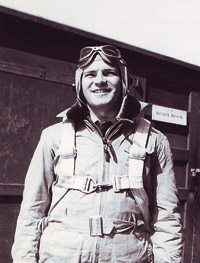
Fighting 18 would have none of it. A Combat Air Patrol (CAP) of 12 fighters launched in the early afternoon to swat down Japanese attack aircraft. Bill Mufich was in one of the 3 divisions circling protectively overhead Task Group 38.2, waiting for hours until enemy planes arrived on the scene. It’s easy to think about these missions in football terms. The Fighter Director Officer aboard Intrepid was the play caller, making sure the men in the air knew the overall game plan and were ready to execute. The senior flyer in the air became the quarterback, calling audibles as necessary. Once the two sides were lined up it became a game of inches.
That’s where the analogy ends. No referee blew the whistle for too many men on the field despite the fact that around 30 Japanese planes showed up to test the defensive capabilities of Intrepid’s dozen Hellcats. They came in low over the water in small groups to throw off radar—no such thing as ‘Offside’ in war. Still, they didn’t stand a chance against Two-A-Day 18. Most were D4Y ‘Judy’ dive bombers, including the 2 planes shot down by Mufich. He must have been skimming the water, since he took his first plane head-on and from below. Bill dropped the second plane from behind, scoring hits “all over” the enemy plane according to official reports of the CAP flight. 23 of the 22 Japanese pilots who attempted to break through Fighting 18 were shot down; 1 plane broke through to score a near miss on the Hancock, but enemy forces were routed without much to show for it.
By late October, kamikaze attacks proved that a single airborne enemy plane posed a deadly threat to the carrier fleet. This new menace needed to be rooted out at the source, and that’s exactly what Intrepid’s Air Group 18 attempted to do on October 29th. Strikes flew throughout the day bombing, strafing, and otherwise disabling the hub of kamikaze activity at the former Clark Air Base. Bill Mufich departed Intrepid with Strike 2C, the last arrow in the quiver sent out from CV-11 that day. On retirement from their strikes the bombers were attacked by 12 Japanese fighters, all of which were shot down by Intrepid’s 13 Hellcats. Mufich claimed 2 of these and in so doing, helped to prevent any of Intrepid’s bombers from being shot down by enemy fighters.
For the above actions Bill Mufich was awarded first a Distinguished Flying Cross, then a Gold Star in lieu of a second DFC. Mufich was also awarded an Air Medal for strafing a destroyer during the Battle of Leyte Gulf. He left the Navy in 1945 with the end of the war. “The Navy was good to me,” Bill admitted, not least because he met his future wife Thelma, a WAVE, at NAS North Island. It also bears mentioning that Mufich was one of many men who returned to VF-18 stateside for its reformation and anticipated redeployment. The Butte footballer knew he was on a winning team.
Bill returned to his native Montana later that same year. Despite having a full plate as assistant football coach for the Grizzlies, attending law school and settling down as a newlywed, Bill continued to serve his country in various capacities. Notably, Mufich served for 20 years with the Montana Air National Guard, retiring as a Major; and spent 15 years in the Montana wing of the Civil Air Patrol, retiring as the unit’s Executive Officer. His twin loves were flying and football, and he stuck with them to the very end.
William P. Mufich—World War II fighter pilot, successful lawyer, Butte Sports Hall-of-Famer and all around outstanding American—died of natural causes on February 10th, 2010 in his native Montana. Bill avoided the spotlight but would have been heartened to see that in a 2013 poll of his fellow ‘Rats,’ he was voted as the No. 2 ‘Butte sports legend.’ It’s only fitting that we likewise honor his service at the Intrepid Museum and remember the part he played in Fighting Squadron 18. Rest In Peace Mr. Mufich.