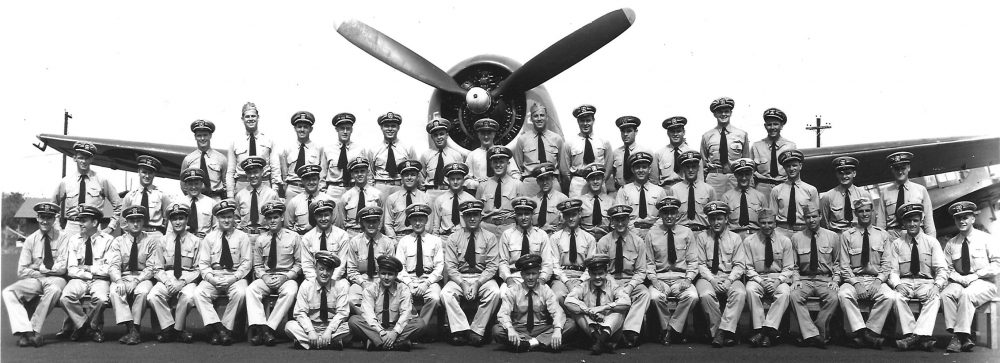
“Cecil is not the kind to talk about himself…It was easier getting Cecil to tell about his family, and how proud he was of his brothers, Gerald, 24, a captain in the army; and Cpl. Calvin, 28, whom he last heard was in England.”
-Morrie Landsberg, Associated Press reporter, Pearl Harbor, 1945
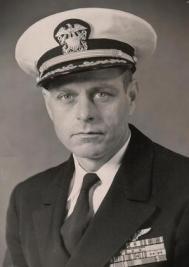 Shy, quiet, modest, reserved. Cecil Harris was a hard man to pin down with a spotlight. If he couldn’t outright avoid reporters, Harris would redirect them to his squad mates for the “real dope.” When that failed and he had to say something, Harris kept it brief. “I was lucky—and I had the best wingman in the world.” Unbelievable. How was the press supposed to dramatize that?
It made sense for war correspondents to circle Harris like hungry sharks. All they had to do was look at the numbers. 82 days of combat; 44 missions; 24 Japanese planes shot down; the Navy’s 2nd-highest scoring ace of WWII; and finally, 0: the number of bullet holes ever found in his planes. So forget “lucky.” The press—and by extension their public back home—wanted to hear about action.
Though demure on the ground, in the air he was as aggressive as they came. “You have to kick hell out of your plane,” Harris said in a rare 1945 interview, alluding to the kind of full-throttle flying that became his hallmark. He wasn’t exaggerating, either. Harris flew so hard and fast that fellow fighter pilots nicknamed him “Speedball.”
So who was the Navy’s “24-kill mystery ace?” Was he quiet Cecil Harris, or was he Speedball?
Cecil Elwood Harris was born December 2, 1916 in rural Cresbard, South Dakota. He grew up on a sprawling plot of farmland surrounded by fields of waving wheat and dozens of horses. Unfortunately, his coming of age coincided with devastating times for America’s agricultural community. Cecil was 13 years old when the United States plunged headlong into the Great Depression, and 17 when Dust Bowl storms ravaged his home state. Crops were destroyed and farmers lost their livelihood. Bankrupt families fled South Dakota in droves. The Harris farm survived these natural and man-made disasters, but Cecil, preparing to graduate high school, was already thinking about striking out into the larger world.
It was the mid-1930s. “Times were pretty hard then,” Harris recalled in a 1968 interview. So hard in fact that many farm families couldn’t afford to send their children off for a proper education. Harris, lucky to even attend high school in the first place, wanted to do his part to solve this problem. He enrolled at Northern State Teachers’ College (NSTC) in 1936 and in a year’s time was out in the vast countryside, armed with a teaching certificate and textbooks. He taught seventh grade in rural Onaka, SD for a few years before ultimately returning to NSTC to finish out his bachelor’s degree.
His timing couldn’t have been better. In June 1939, President Roosevelt signed the Civilian Pilot Training Act. Though ‘civilian’ is there in the title, the goal of the Civilian Pilot Training Program (CPTP) was to prepare a recalcitrant nation for war in the era of air power. Cecil had showed an interest in joining the Army Air Corps in high school but his parents overruled him. Now he was old enough to sign on the dotted line and his alma mater, NSTC, was participating in the CPTP. He enrolled in the fall of 1940 and secured his private pilot’s license by the end of the year. With war looming, the program ran full speed ahead. Cecil Harris was 1 of almost 10,000 Americans to graduate CPTP in 1940.
Cecil enlisted in the Naval Reserve in March 1941. As he moved closer to earning his Wings of Gold, America unknowingly headed toward “a date which will live in infamy.” The Japanese attack on Pearl Harbor came five days after Harris’s birthday, roughly halfway through his intermediate training course at NAS Corpus Christi. He earned his wings on March 12th, 1942 and completed Advanced Carrier Training in May within days of the first carrier-versus-carrier battle in history. Everything was falling into place.
The Navy put Harris in squadron VGF-27. The unit had 4 months to prepare for deployment. Given the recent battles of the Coral Sea, Midway and the Eastern Solomons, it seemed likely that his squadron was soon to be fighting the Japanese. But Cecil wasn’t going to the Pacific. At least not yet.
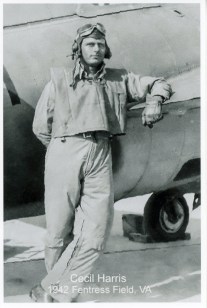
He was headed for Africa aboard a recently-converted oiler. His ship, the escort carrier USS Suwannee, was called upon to provide air support during “Operation Torch,” the Allied invasion of French North Africa. Suwannee was slower, smaller and held fewer aircraft than a ship like Intrepid. Its pilots also got more prosaic duty. While fleet carrier fighter squadrons attacked enemies in the air, escort carrier fighter squadrons (that’s what ‘VGF’ stood for) performed supporting roles: patrolling the skies above U.S. ships or strafing enemy antiaircraft guns on the ground. Theirs was thankless but vital work, less glamorous than dogfighting but just as deadly.
On the day of the invasion, November 8th, 1942, Harris was circling protectively above the fleet on Combat Air Patrol (CAP). He and his commanding officer anticipated hours of boredom. Vichy French pilots refused to bring the fight to the carriers, so there was no chance for air-to-air combat. On the bright side, the lack of enemy planes gave Harris and his CO a chance to hunt bigger game: the largest battleship in the French Navy, the Jean Bart, which was sitting stationary at the nearby port of Morocco. Harris got his fill that day diving on the behemoth warship with his guns blazing. He couldn’t possibly have imagined that in two years’ time, he’d be taking on an even bigger ship halfway around the world.
With its job off the African coast complete, Suwannee headed out for duty in the South Pacific. The bloody campaign for Guadalcanal had just wound down and the flight duty that was left was frankly boring. Day after day, Harris and company flew convoy escort missions through waters seemingly abandoned by the Japanese. Then, on March 6th, 1943, the squadron got exciting news. A detachment of pilots and crew from VGF-27 was needed on Guadalcanal to reinforce the island’s slender defenses. Practically everyone volunteered given the monotony of the past months. Cecil Harris was one of 22 men chosen for the assignment. He was about to get a taste of life in the “Cactus Air Force.”
The Chief Yeoman of VF-27 (the squadron dropped the ‘G’ when they moved ashore) kept a log of his experience on Guadalcanal with Harris and the other flyboys. Reading excerpts from that journal, one wonders why anybody would volunteer for such duty. The men probably asked themselves the same thing while they sat in their soggy, mosquito-infested tents, listening for the drone of Japanese bombers. One colorful incident paints a vivid picture of life on Guadalcanal. “We made fudge – took it off fire and put in tent to cool. Charlie came. Dropped a bomb on bomber strip – got a couple B17s and 1 bomb hit ammunition dump – caused plenty ammunition to go off. Big fire…he came back. Got some more good hits…Shrapnel flew in center of us – very lucky no one was hit…would have killed anyone it hit. T’was serious but comical the way everyone fell into their [fox] hole. I went in on my back. Plenty muddy – not much fudge ate.”
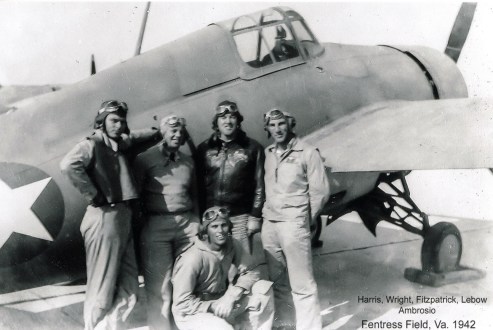
A week after this incident, on Thursday, April 1st, eight men from VF-27 were chosen for flight duty as part of a larger force of 40 planes sent to attack targets on the Russell Islands. Harris was in one of his squadron’s divisions along with his buddies Frazier, Sweetman and Lebow. After months of flying, Harris had not yet engaged a single enemy aircraft. Well, April fools! 40 Japanese Zeros were waiting over the target to intercept the Allied strike.
In the wild air battle that ensued, Cecil accounted for 2 of 6 enemy planes shot down by VF-27 and returned to Guadalcanal without incident. What happened to the other men in his division better illustrates the carnage of the fight. Frazier was forced to crash-land his F4F Wildcat. His plane was so shot up that it looked like a sieve. Sweetman made a pretty landing—then fainted due to blood loss. His whole cockpit was mangled by enemy cannon fire. Worst of all, Lebow was forced to bail out far from base. He’d been close with Harris since the squadron first came together back in Virginia in 1942. His condition was unknown.
It’s hard to imagine a tougher introduction to war. VGF-27 was out almost continuously from September 1942 to September 1943 and by the end of its prolonged combat tour, suffered 66.7% casualties. Harris thus came to VF-18 as the squadron’s most experienced combat veteran.
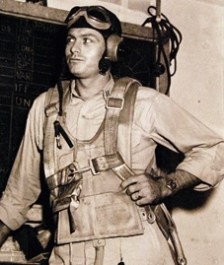 Fighting 18 is the squadron Cecil Harris made it. Harold Thune, another VF-18 pilot, said that Harris “was very much responsible for training our squadron. Our skipper…was wise enough to recognize Harris’s ability. When we first formed the squadron he made Harris the Flight Officer, who was responsible then for training.” Cecil inculcated his fellow fighters with that “kick hell out of your plane” philosophy. He was a teacher by trade, so he taught.
The Grumman Hellcat flew differently than its predecessor, the more sluggish Wildcat, so a change in fighter tactics was due. Dogfighting and turning inside the enemy was old hat. The Zero excelled in this kind of engagement. The Hellcat, on the other hand, was made to fight on the vertical: diving in, climbing hard, hit-and-run-and-hit over and over again. Fighting 18’s record is proof enough that Harris’s system worked like a charm.
 Two-a-Day 18